
CLIMBING MOUNTAIN KILIMANJARO
Mount Kilimanjaro – Africa’s Highest Mountain | Facts, Height, Routes & Location


Ready for an unforgetable tour?
Why Kilimanjaro Is So Famous
There are thousands of mountains worldwide, yet Kilimanjaro stands out for several reasons:
The World’s Highest Free-Standing Mountain
Unlike the Himalayas or Andes, Kilimanjaro rises alone from the East African plains.
Seven Summits Challenge
Kilimanjaro represents Africa in the elite list of the Seven Summits, the tallest peaks on each continent.
Accessible Adventure
Unlike Everest, no technical climbing gear is required. Trekkers can reach the summit with strong determination, proper acclimatization, and guided support.
Cultural Importance
To local Chagga people and Tanzanians, Kilimanjaro is a sacred and life-sustaining landmark.
Iconic Symbol of Africa
Its snow-capped peak rising above the savannah is a postcard image known worldwide.
Facts About Mount Kilimanjaro
Location
Northeastern Tanzania, near the Kenya border
Height
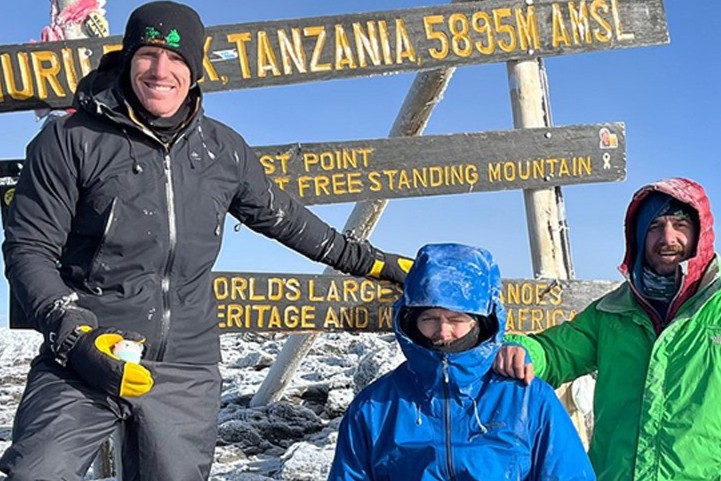
5,895 m (19,341 ft) – Uhuru Peak
First Recorded Summit
1889 by Hans Meyer & Ludwig Purtscheller
Volcanic Cones
Kibo (dormant), Mawenzi (extinct), Shira (extinct)
National Park
Kilimanjaro National Park (UNESCO World Heritage Site, since 1987)
Climate Zones
5 distinct ecological zones, from rainforest to Arctic desert
The Legendary First Impression
European explorers in the 19th century could hardly believe reports of a snow-capped mountain in equatorial Africa. Missionary Johannes Rebmann first documented it in 1848, describing “a giant mountain covered with eternal snow.” His accounts were initially dismissed as fantasy—until later explorers confirmed Kilimanjaro’s icy crown.
Today, the shrinking glaciers of Kilimanjaro are both a scientific marvel and a symbol of climate change.
Kilimanjaro in Tanzanian Identity
To Tanzania, Kilimanjaro is more than geography—it is national pride. It is immortalized in the country’s tourism slogan, featured on stamps and currency, and celebrated in music and literature. For travelers, learning about Kilimanjaro is also about understanding its role as a cultural and economic powerhouse:
Local communities earn their livelihood through guiding, portering, and tourism services.
The mountain sustains agriculture with fertile volcanic soil.
It attracts global attention as one of Earth’s most accessible “bucket list” adventures.
Why Travelers Want to Know About Kilimanjaro
For international adventurers, Kilimanjaro represents:
A Personal Challenge – Reaching Uhuru Peak is a life-changing achievement.
A Natural Wonder – Few places on Earth offer such rapid transitions in climate and scenery.
A Cultural Journey – From Moshi’s coffee farms to Chagga traditions, the climb is more than just trekking.
A Conservation Mission – Learning about Kilimanjaro also means understanding the fragile ecosystems that need protection.
A Mountain for Everyone
Unlike most of the world’s tallest peaks, Kilimanjaro is accessible to regular trekkers, students, and even older travelers. With the right preparation, guided support, and safe pacing, thousands of climbers of all ages successfully reach the summit each year.
This inclusivity makes Kilimanjaro a universal symbol of achievement, whether you’re a seasoned mountaineer or a first-time trekker.
In short: When you search “About Kilimanjaro,” you uncover a story that blends natural wonder, human determination, and cultural heritage. It is more than just Tanzania’s crown jewel—it is a mountain that belongs to the world.
5 Stunning Ecological Zones of Mount Kilimanjaro
Mount Kilimanjaro is unique because climbers pass through five distinct ecological zones, from equatorial rainforest to the icy arctic summit. Each zone has its own landscape, weather, wildlife, and challenges.This rapid shift in environments makes Kilimanjaro a journey from the tropics to the Arctic in days. Knowing these zones is vital for preparation, as every stage requires different gear, stamina, and mindset.
At the base of Mount Kilimanjaro, the journey begins in the cultivation zone, a fertile belt sustained by rich volcanic soil and abundant rainfall. Here, the Chagga people—who have lived around Kilimanjaro for generations—farm crops such as bananas, coffee, maize, and beans, creating a patchwork of green plantations along the lower slopes.
The climate in this zone is warm and humid, with year-round moisture that makes it ideal for agriculture. While trekkers don’t usually spend much time here during the climb, passing through offers a glimpse into the daily lives of the Chagga and the cultural heartbeat of the mountain.
This is more than just the starting point of a trek—it’s the foundation of Kilimanjaro’s cultural heritage and ecological diversity.
Lush, green, and teeming with life, the rainforest zone on Mount Kilimanjaro is often the first ecological area trekkers encounter after leaving the cultivated foothills. This vibrant band of forest stretches between 1,800 and 2,800 meters (5,900–9,200 ft) and is characterized by dense vegetation, towering trees, moss-covered trunks, and thick undergrowth.
The rainforest is alive with wildlife, including blue monkeys, colobus monkeys, bushbucks, and a dazzling array of exotic bird species, making it a paradise for nature lovers. The climate here is warm and humid, with frequent rainfall that keeps the forest flourishing year-round.
Because conditions can change quickly, waterproof clothing, gaiters, and rain covers for backpacks are essential for trekkers. Beyond its natural beauty, this zone plays a critical role in Kilimanjaro’s ecosystem, acting as a water catchment area that sustains rivers and local communities on the mountain’s slopes.
As you ascend Mount Kilimanjaro, the rainforest gives way to the heath and moorland zone, typically found between 2,800 and 4,000 meters (9,200–13,100 ft). Here, the landscape opens up to vast grasslands, shrubs, and rocky outcrops, offering sweeping views of the mountain and the plains below.
The air grows cooler, and nighttime temperatures can drop significantly, often requiring warm layers. While there are fewer trees, this zone is home to unique high-altitude plants such as giant lobelias and giant groundsels, which have adapted to survive in the harsher climate.
Weather conditions in the heath and moorland zone are unpredictable. Trekkers can encounter strong winds, mist, and sudden rainfall, making proper gear and layered clothing essential. This zone serves as a dramatic transition from the lush lower slopes to the more barren alpine desert above.
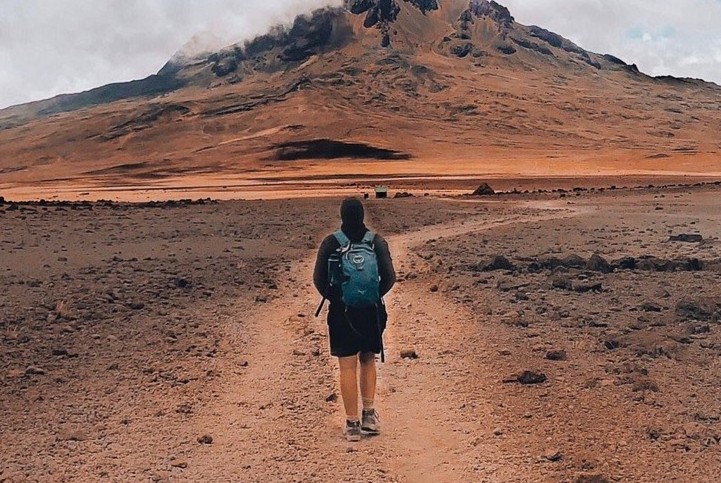
Above the moorland lies the alpine desert zone, typically between 4,000 and 5,000 meters (13,100–16,400 ft). This harsh, dry environment is defined by scant vegetation, rocky terrain, and extreme temperature fluctuations.
Daytime brings intense sun exposure and strong UV radiation, while nights can be freezing, often dropping well below zero. Oxygen levels decrease significantly, making altitude acclimatization and pacing crucial for climbers.
The landscape is mostly barren, with little moisture, creating a desert-like environment that challenges both body and mind. Despite its starkness, this zone is strikingly beautiful, with dramatic views of Kibo and Mawenzi peaks and the glaciers above.
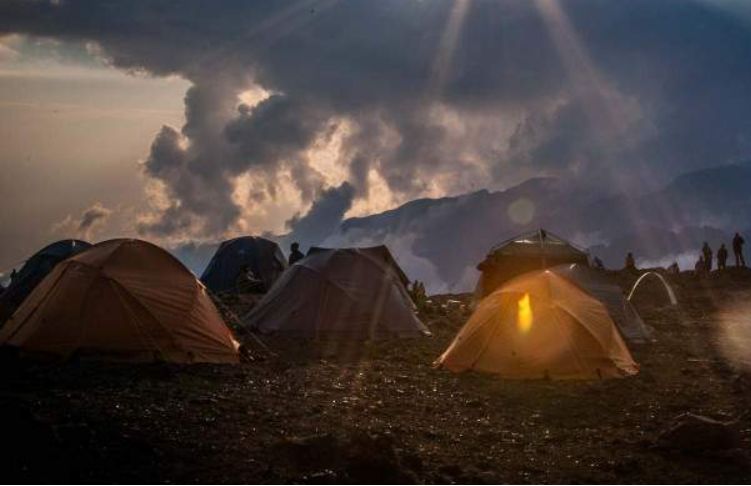
On your Kilimanjaro trek, experienced and trained porters carry your gear, food, and camping equipment, allowing you to focus entirely on the climb. These skilled guides ensure your belongings are safely transported, while also providing invaluable support, encouragement, and local knowledge throughout the journey.
Hiring porters not only enhances your climbing experience but also supports the local Chagga communities, making your trek both safer and socially responsible.
FAQ
Most frequent questions and answers
I am item content. Click edit button to change this text. Lorem ipsum dolor sit amet, consectetur adipiscing elit. Ut elit tellus, luctus nec ullamcorper mattis, pulvinar leo.
I am item content. Click edit button to change this text. Lorem ipsum dolor sit amet, adipiscing elit. Ut elit tellus, luctus nec mattis, pulvinar dapibus leo.
I am item content. Click edit button to change this text. Lorem ipsum dolor sit amet, consectetur adipiscing elit. Ut elit tellus, luctus ullamcorper mattis, pulvinar dapibus leo.
I am item content. Click edit button to change this text. Lorem ipsum dolor sit amet, consectetur adipiscing elit. Ut luctus nec ullamcorper mattis, pulvinar dapibus leo.
I am item content. Click edit button to change this text. Lorem ipsum dolor sit amet, adipiscing elit. Ut elit tellus, luctus nec ullamcorper mattis, pulvinar dapibus leo.